
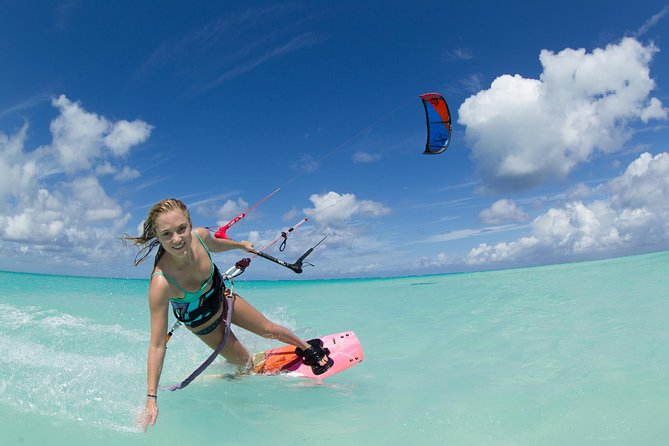
Reviewed · WATERSPORTS LESSONS
Fast-Track Kiteboarding Camp: Best for Beginners
The goal here is clear: take you from no kiteboarding experience to your first waterstarts in about three hours. You begin on the beach with teaching aids, learn to handle the kite, then work in the water with jet ski support nearby. It is a brisk introduction, not a leisurely beach lesson.
I like the small group size, limited to two or three people, and the way the lesson builds in a sensible order: kite setup, safety, control, body surfing, power management, then the board. I also like that the price includes equipment, instruction, taxes, and jet ski support, so you are not assembling the experience piece by piece.
The main catch is that the time is not fixed when you book. The school schedules lessons around low tide, when you can stand and walk in the water, and sends your exact time afterward. That flexibility makes sense for teaching, but it can make your day harder to plan.
Key points to know before booking
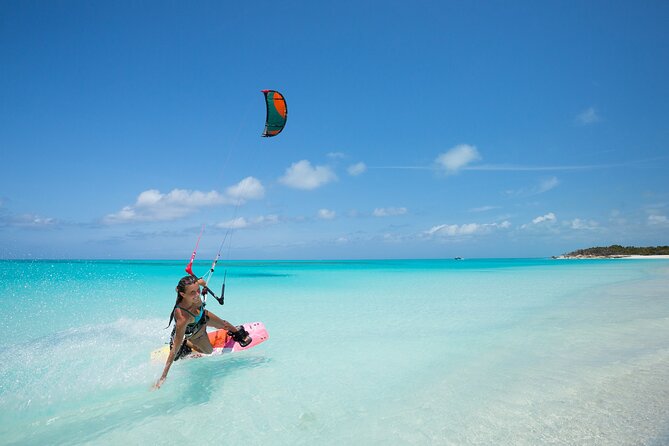
- Your first waterstarts are the target: The lesson is built for beginners and aims to get you making initial starts on the board.
- Only two or three people share the lesson: You get a more personal session than a large group class, while paying less than a fully private lesson.
- Low tide controls the schedule: Exact departure times change daily because the instructor needs shallow water where you can stand and walk.
- Beach instruction saves water time: You learn setup and basic kite handling before entering the water.
- Jet ski support is included: This gives the lesson an added support system while you work on kite control and board starts.
- You need moderate fitness: Expect time in the sun, repeated practice, body surfing, and physical effort while learning to control the kite.
A fast start at Kite Provo in Providenciales
Kite Provo has operated in Turks and Caicos since 2006, with roots reaching back to the early days of kiteboarding. That background matters most in the teaching style. This is not simply a rental shop handing you equipment and pointing toward the water. The session is built as a first lesson, with instructors trained to explain the sport clearly.
You meet at Swaying Palms on Joe Wood Drive in Leeward Settlement. The activity returns to this same meeting point, and hotel pickup is not included, so you need to arrange your own way there. The location is near public transportation, but the supplied details do not promise a shuttle or private transfer.
The lesson takes about three hours. That sounds short for learning a sport with a steep learning curve, but the format keeps the session focused. You are not spending half the morning on sightseeing, waiting for a large group, or watching advanced riders. You are working toward one specific milestone: controlling enough power to make your first starts on the board.
The school offers several possible departures during the day, but the exact time is sent after booking. Tide conditions control the schedule. At low tide, you can stand and walk in the water, which is important for a first lesson because you can reset yourself more easily after a mistake.
That tide-based planning is both a strength and a mild nuisance. It creates better teaching conditions, but you should avoid booking another fixed activity too close to this lesson. Leave room in your Providenciales plans.
Other lessons on the water in Providenciales:
- Bring A Friend Kiteboarding Lesson
★ 5.0 · 38 reviews - Hobie Cat Sailing Lesson
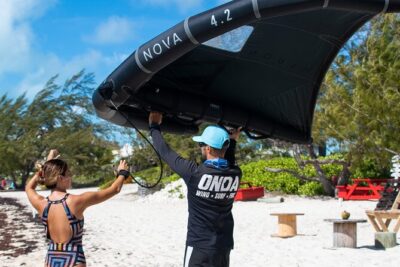
★ 3.0 · 17 reviews - 2 Hour Private Winging Lesson in Long Bay Beach
★ 5.0 · 12 reviews
The beach session: learning before the water
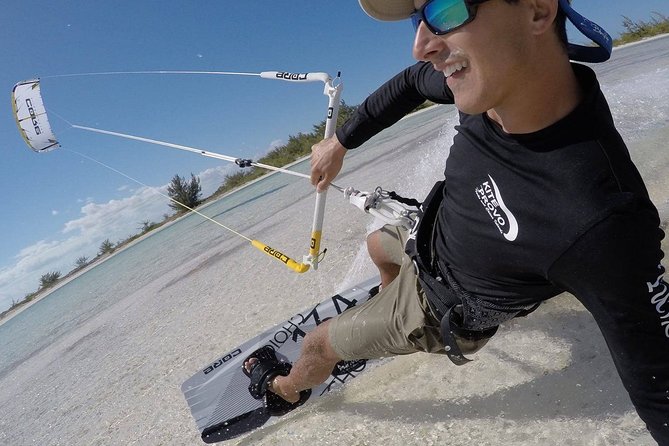
The first stage uses teaching aids on the beach. This is where you learn how the kite works before dealing with water, wind, and a board at the same time. You go through the equipment, learn how to set it up, and begin practicing the basic controls.
For a beginner, this part is more important than it may sound. Kiteboarding asks you to manage several things at once: the kite, the lines, your body position, the wind, and eventually the board. Starting on land gives you time to understand the controls without immediately adding the challenge of staying afloat.
You also learn the safety systems before getting serious power from the kite. That is one of the strongest parts of the lesson. The sport is exciting because the kite can generate force, but that same force makes correct setup and quick release skills essential.
Expect the instructor to move at a practical pace. The exact balance between explanation and hands-on practice can vary with the group, wind, and each person’s ability. Because the maximum group size is three, the instructor can watch each student instead of leaving you to figure out the controls alone.
This is also where the semi-private format makes sense financially. At $450 per person, the lesson is not cheap, but you are sharing a professional instructor and a full kit with only one or two other students. Compared with booking a private session, that can offer a useful middle ground.
Kite control on the water
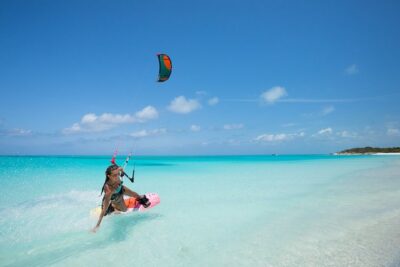
Once the beach work is done, you move into the water to practice kite control. The lesson covers how to steer the kite, how to relaunch it after it falls, and how to regulate the power it creates.
Relaunching is a particularly useful skill for a first day. A kite will not stay perfectly positioned every second, especially while you are learning. Knowing how to get it moving again is more practical than simply learning how to fly it when everything is going well.
You also work through the safety systems in the water. That may not be the most glamorous part of the session, but it gives you a safer base for the more exciting exercises later. I would pay close attention here and ask the instructor to repeat anything that feels unclear.
Body surfing is another step in the progression. It helps you become comfortable with the kite’s pull while your body is in the water and the board is not yet part of the equation. You begin to feel how much power the kite is producing and how to respond to it.
The included jet ski support is an important practical feature. The supplied information does not promise a separate ride or describe the exact rescue procedure, so think of it as on-water support for the lesson rather than an extra attraction. Its presence can help the instructor manage the session while you concentrate on learning.
From kite power to your first board starts
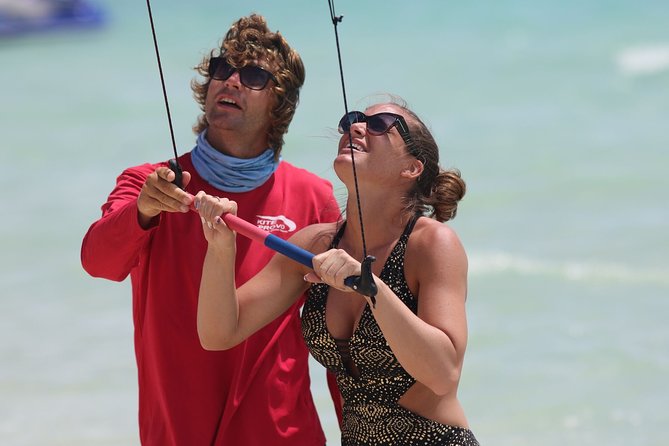
The final goal is the waterstart, your first attempt to rise onto the board while the kite pulls you forward. This is the moment when the earlier steps come together: kite position, power control, body movement, and board handling.
Do not expect every student to become a fully independent kiteboarder in one session. The promise is more modest and more realistic: you work toward your first exciting starts. Some people may get up briefly, while others may spend more time repeating body positioning and power control.
That distinction matters when you judge the value. You are paying for a structured introduction and a chance to build a foundation, not a complete certification or a full multi-day course. If you already know you want to continue, you may wish you had booked additional lessons during the same holiday.
Several details make the progression easier to understand. First, you control the kite on the beach. Then you control it in the water. Next, you learn to manage the power while body surfing. Only after that do you bring in the board.
That order cuts down on wasted effort. If you tried to learn the kite and board at the same time, you would have too many new movements competing for your attention. The teaching plan instead gives you one problem at a time.
Same stretch of water, a different sort of trip:
- 4hour Group Half Day Snorkeling Excursion in Grace Bay
★ 5.0 · 2,614 reviews - 4-Hour Catamaran Sail and Snorkel Tour from Grace Bay
★ 5.0 · 1,465 reviews - Love Buggy Island Tour with Lunch
★ 5.0 · 1,242 reviews - Morning Half Day Cruise from Providenciales with Snorkeling and Iguana Island
★ 4.5 · 1,222 reviews
Why the instructors matter
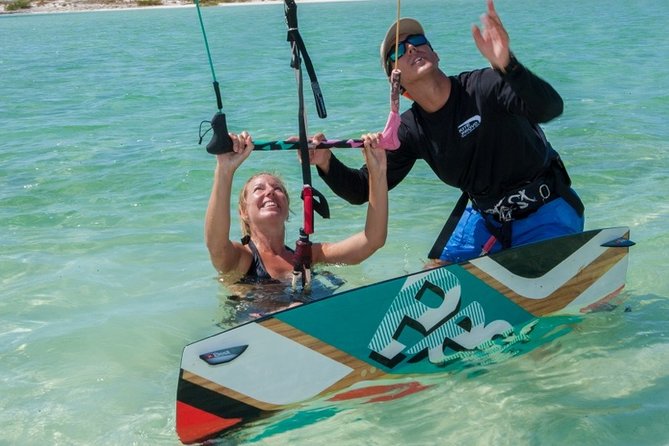
Kite Provo’s instructors are described as trained in communication, and that is exactly what a first lesson needs. Kiteboarding has plenty of technical terms and small movements that are hard to understand from vague directions. Clear instruction can save you time and reduce frustration.
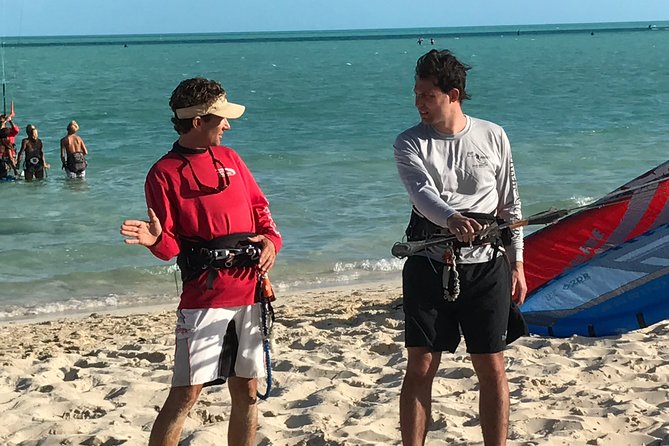
Alan and Mike are among the instructors associated with sessions of this kind. Alan is described as thorough, patient, and encouraging. Mike is noted for adjusting the pace well while helping a beginner turn kite control into a usable skill.
Those qualities are especially useful for families or mixed-ability groups. A 15-year-old, a 12-year-old, and a parent have taken the lesson together, with all three working with the same instructor. The school’s minimum age is 10, so children who meet the weight requirement can take part.
A shared lesson still means you will not have the instructor’s attention every second. That is the trade-off for the lower price than a private class. With only two or three people, though, you should receive regular personal correction and enough turns to keep progressing.
If you are nervous about trying a water sport, tell the instructor early. Patient coaching matters more than flashy demonstrations during a first session. The strongest fit here is someone who wants direct guidance, is willing to repeat a movement, and does not expect instant mastery.
The $450 price and what it covers
The listed cost is $450 per person. That places the experience firmly in the premium activity category, so it deserves a close look before you book.
The fee includes the equipment needed for the lesson, instruction, jet ski support, and the applicable 12 percent government taxes. You do not need to rent a kite or board separately for this session. That all-in structure makes the price easier to judge because the main lesson costs are already included.
You still need to budget for your own food and drinks, transport to and from Swaying Palms, sun protection, and any personal items. A three-hour lesson in Providenciales can be tiring, so bring water and a small high-energy snack such as dried fruit, nuts, or a power bar.
The semi-private format is the key value point. You get a group capped at three people, rather than joining a large class where the instructor may spend long stretches with someone else. If your priority is a personal introduction without paying for a private lesson, the setup is appealing.
If you are unsure whether you want to continue with kiteboarding, the cost is harder to justify. If learning a new sport is one of your main holiday goals, the equipment, instructor, safety work, and water support make the fee more reasonable.
What to bring for a more comfortable lesson
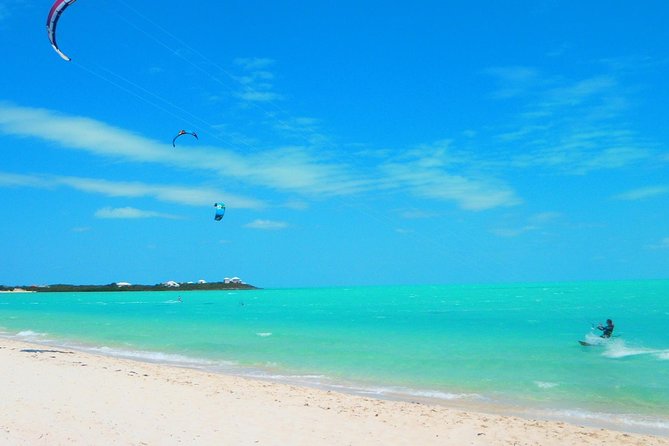
Bring sunscreen and water. You will be outdoors and physically active, and the school specifically recommends both.
Inexpensive sunglasses with a strap are also recommended. Do not bring your expensive pair. Sunglasses may help with glare, but the strap matters when you are moving through the water and handling the kite.
Water shoes or neoprene booties are optional and usually not needed. You can bring them if you are concerned about your feet, but they are not presented as required equipment.
A snack is a smart addition. The school suggests high-energy options such as a power bar, dried fruit, or nuts. Food and drinks are not included, so plan ahead rather than assuming you can buy something during the three-hour session.
You should also arrive ready for moderate physical activity. The lesson includes standing, walking in shallow water, body surfing, repeated practice, and working with kite power. The minimum weight is 80 pounds, and the minimum age is 10.
Who will get the most from this lesson
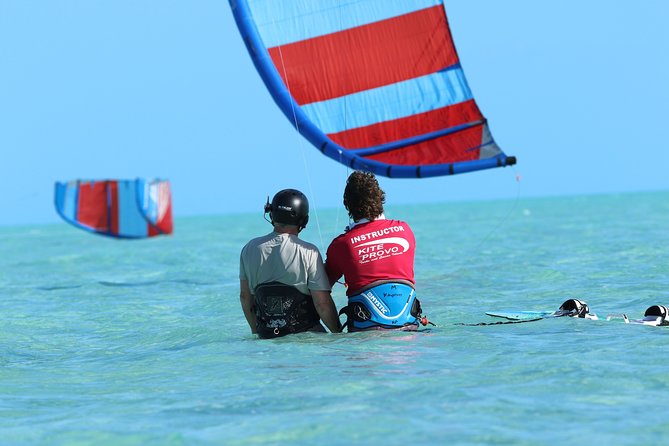
This experience is aimed at the true beginner. You do not need previous kiteboarding skills, and the teaching plan starts with equipment setup and basic kite handling.
It also suits you if you want a structured challenge beyond the usual beach day. The lesson gives you a clear goal and enough time to try the sport without committing to a long course.
Families may find the age range useful, provided each participant weighs at least 80 pounds and has a moderate fitness level. The group limit of three helps keep a family session personal.
The lesson is less suitable if you need a fixed start time. Since the school schedules around low tide and sends the exact time after booking, you need to keep your day flexible. It is also not ideal if you want a guaranteed full ride across the water. The stated aim is your first starts, not advanced riding.
You can cancel for a full refund up to 24 hours before the start time. Changes made inside that window are not accepted, and cancellations within 24 hours are not refunded. Poor weather can also cancel the session, in which case you are offered another date or a full refund.
Should you book the Fast-Track Kiteboarding Camp?
Book it if you want a serious first taste of kiteboarding, value patient instruction, and can arrange your day around a tide-based schedule. The small group, full equipment, safety training, and jet ski support give you more structure than a casual equipment rental.
I would especially consider it if you are staying in Providenciales long enough to take another lesson. A first session can teach you the basics and perhaps get you onto the board, but another day would give those new skills time to settle.
Think twice if $450 feels too high for a three-hour introduction or if you need a guaranteed start time. For everyone else, this is a focused way to trade a few hours of beach lounging for a real challenge, with the teaching plan aimed at getting you from first kite control to your first waterstarts.
FAQ
How long is the kiteboarding lesson?
The lesson lasts approximately three hours.
Where does the activity begin?
It begins at Swaying Palms on Joe Wood Drive in Leeward Settlement, Providenciales, Turks and Caicos.
Does the activity return to the meeting point?
Yes. The activity ends back at the meeting point.
What age is required to participate?
The minimum age is 10 years old.
Is there a minimum weight?
Yes. The minimum weight is 80 pounds.
How many people are in the lesson?
The lesson has a maximum of three participants.
Is equipment included?
Yes. The equipment needed for the lesson, instruction, jet ski support, and applicable government taxes are included.
How is the lesson time chosen?
The exact time is sent after booking because the lesson must take place at low tide, when you can stand and walk in the water.
Just added in Providenciales
- Shared Horseback Riding in Turks and Caicos★ 4.5 · 7 reviews
- Jet Ski Fest in Turks and Caicos Islands★ 5.0 · 4 reviews
- Wow Extreme Tube on Gracebay Beach Turks and Caicos Islands★ 4.5 · 7 reviews
- Private Luxury Transfer to/from Airport Turks and Caicos★ 5.0 · 3 reviews
- Relaxation and Therapy Massage in Paradise Turks and Caicos★ 5.0 · 11 reviews
- Turks and Caicos: Private ONE-WAY Airport Transfer★ 4.0 · 10 reviews
- 2-Hour Luxury Axopar Private Charter! Explore the Turks in style!★ 5.0 · 5 reviews
- Trolley Island Tour: Conch Show, Full Lunch, History, 3.5 hours★ 4.0 · 8 reviews
Watersports Lessons, compared.
2 Hour Private Winging Lesson in Long Bay Beach
Read our review →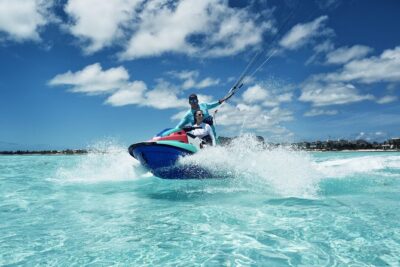
Browse the lists this tour appears in